


Accreditations:
 |  |
Memberships:
 |  |

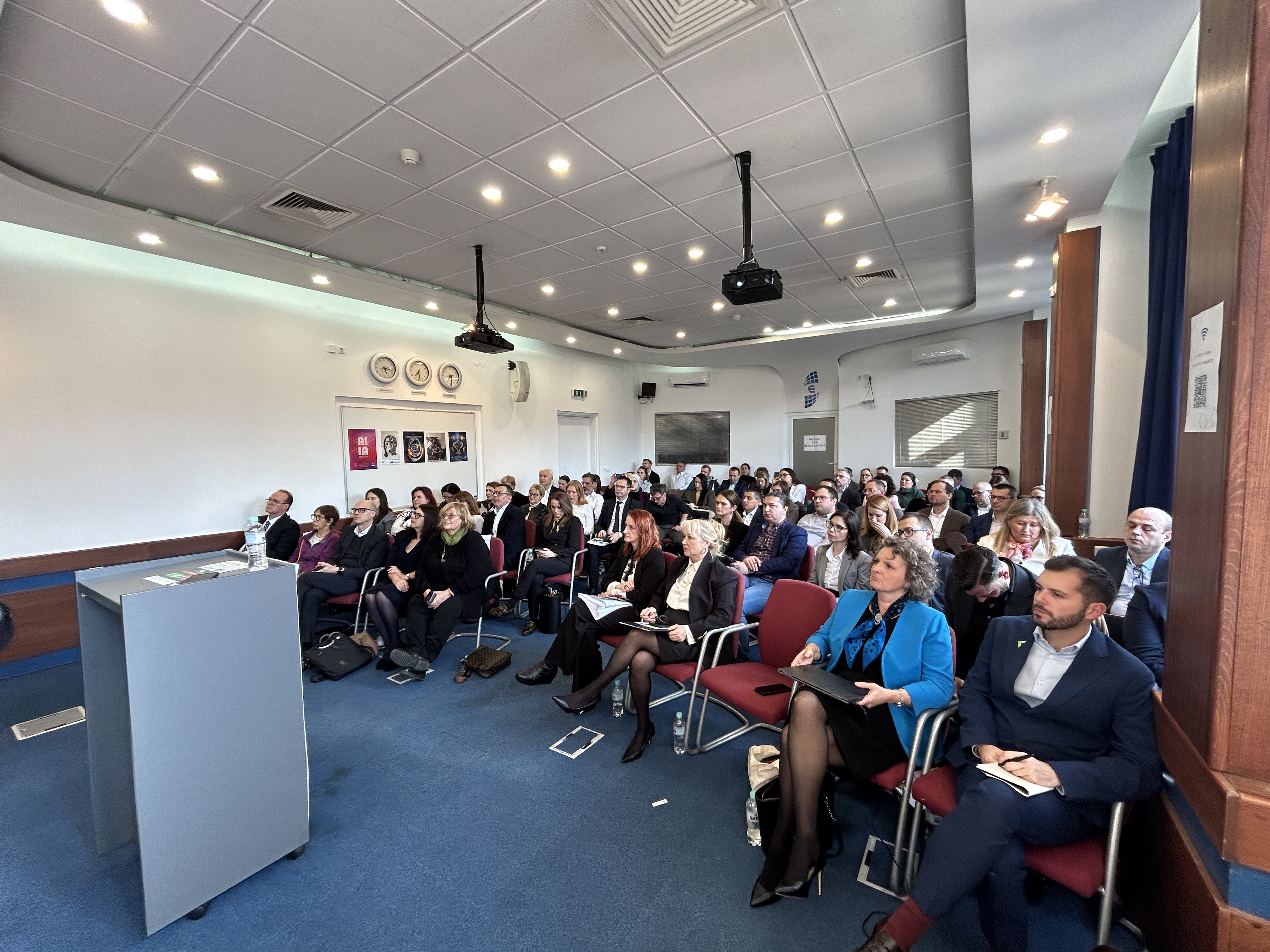
On Monday, 16 February 2026, Sarajevo became a regional hub for dialogue on quality and the future of economics and business education. The School of Economics and Business, University of Sarajevo (SEBS), hosted the information session “Unlocking Opportunities in the Western Balkans: A Regional Dialogue on Advancing Business Education,” organized in cooperation with AACSB International. The event gathered more than 70 representatives from 28 institutions across 12 European countries.
The session was officially opened by the Dean of the School of Economics and Business, Professor Meliha Bašić, who emphasized that this gathering was not merely a discussion on accreditation frameworks, but above all a platform for dialogue, connection, and shaping a shared regional future for higher education. In her address, she highlighted that higher education institutions in the Western Balkans are facing serious challenges — including demographic decline, increasing student mobility, limited resources, and rising labor market expectations — while simultaneously encountering significant opportunities for strategic positioning and internationalization. Dean Bašić underlined that the School of Economics and Business, University of Sarajevo is the only economics and business school in Bosnia and Herzegovina holding both AACSB and EFMD Bachelor accreditations, stressing that for SEBS, accreditation has never been merely a symbol of prestige, but a catalyst for profound institutional transformation.
On this occasion, Ihsan Zakri, Vice President for EMEA Growth and Engagement at AACSB, spoke about contemporary global trends in business education and the growing importance of international standards. Zakri particularly emphasized that accreditation is not an administrative procedure nor a formal audit, but a process requiring strategic clarity, measurable objectives, and continuous commitment to improvement. Through such frameworks, business schools strengthen their international recognition, credibility, and long-term competitiveness. He noted that international accreditations raise standards across all aspects of a school’s operations — from governance and strategic planning to curriculum management, research activities, and systematic engagement of students, alumni, and the business community — serving as a powerful instrument for continuous improvement rather than a one-time distinction.
The SEBS accreditation journey was presented by Dr. Jasmina Selimović, former Dean and Head of Accreditation Processes at SEBS. Reflecting on the transformation the institution underwent, she stressed that the process required strong alignment between mission, strategy, and day-to-day decision-making, clearly defined learning outcomes, regular performance measurement, and the willingness to acknowledge and address institutional weaknesses. As emphasized, accreditation enhances institutional accountability and international visibility, but most importantly, it transforms organizational culture — shifting from declarative to evidence-based quality.
The event was further strengthened by the presence of members of the SEBS International Advisory Board — Mark Thomas, Senior Associate at Hardcastle & Associates and former Associate Dean at Grenoble EM; Neslihan Tozge, Independent Board Member and former FMCG executive; and Andrea Tracogna, Professor of Strategy at the University of Trieste and Dean of MIB Trieste School of Management. Following the official program, the Advisory Board held a working meeting with the School’s leadership to discuss further process improvements, international growth, and SEBS’s strategic development within the European higher education space. The meeting was joined online by Branimir Muidža, General Manager for Croatia and Bosnia and Herzegovina at Heidelberg Materials Group, further reinforcing the School’s strong connection with the business community and industry.
The conclusions of the session clearly demonstrated that quality in higher education today requires continuous self-assessment, transparency, and readiness for change. International accreditations are increasingly becoming mechanisms that encourage institutions to pursue ongoing process improvement, measurable results, and meaningful engagement of all key stakeholders. Through this event, Sarajevo and the School of Economics and Business, University of Sarajevo reaffirmed their role as a regional leader and reliable partner in building modern, responsible, and globally relevant business education.
University of Sarajevo – School of Economics and Business
| |
| |